
BTS or MRT? Choose the route that makes your workday easier
Compare Bangkok’s BTS and MRT networks for remote work, including the best connected areas, café styles, interchanges, last-mile walks, costs and sample workday routes.
Quick answer
Choose the line that connects the places you use most. One easy train ride and a manageable walk often matter more than being beside a famous station. If your week crosses both networks, look closely at the interchange and the walk at each end.
Choose the direct route to your actual stops
| Your situation | Start with | Check before choosing |
|---|---|---|
| Ari / Saphan Khwai cafés | BTS | Café exit and final walk |
| Sam Yan / Rama 9 stops | MRT | Exact destination, not district name |
| Both networks in one day | Compare an interchange route | Transfer walk and current fare rules |
Use this as a decision aid. Check the exact café, route and current terms before committing; examples are not live prices or reservations.
1. Decide by your weekly map, not the rail brand
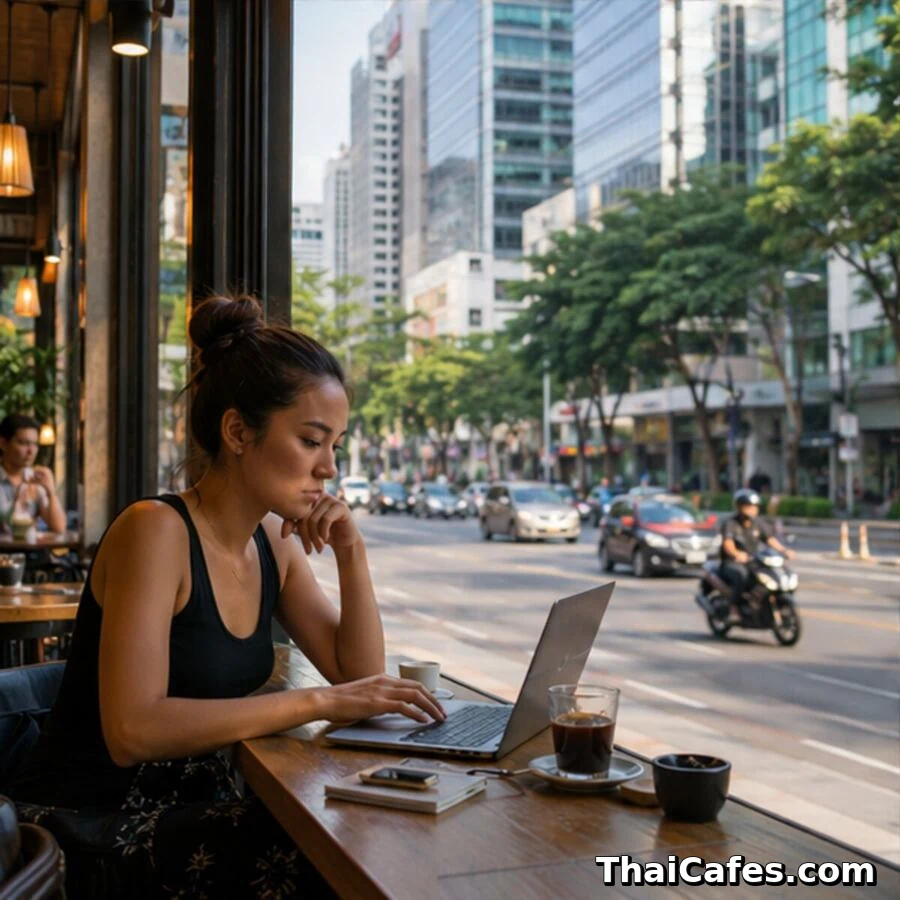
It is easy to compare BTS and MRT as if one must be better. For café work, your own week usually settles the question. Put home, your usual meeting place and two cafés on a map. A route that serves those places without a difficult transfer will make more difference than the name on the train. Think about the trip home too, particularly after a long afternoon with a laptop bag.
Transfers create hidden costs: platform walks, queues, escalators, ticket systems and the risk of choosing the wrong exit. Interchanges such as Asoke–Sukhumvit, Sala Daeng–Si Lom, Mo Chit–Chatuchak Park and Ha Yaek Lat Phrao–Phahon Yothin can expand your choices, but the walk between systems is not always instant. If you change lines twice each day, a supposedly central home may feel less convenient than a slightly farther area on one direct line. Test the route at the hour you would actually travel, with your laptop bag.
Also separate ‘near a station’ from ‘well connected’. A condo beside a station on the outer end of a line can be physically convenient but still require long rides. A room seven minutes from an interchange may produce a shorter, more resilient workweek. Compare door-to-door time, not train time alone. Include the walk from platform to street, heat, rain and whether the café lies on the same side of a major road. This is particularly important at large MRT stations with multiple exits and long underground passages.
For a north-side café day, compare Ari and Sanam Pao before deciding where to get off. Hungry Brown is listed under both, with a shorter approach from Sanam Pao. For the centre of town, open the BTS Asok and MRT Sukhumvit station pages rather than treating the interchange as one identical entrance. Our Bangkok rail work guide explains how to plan the street part of the journey.
2. Where BTS is strongest for café-based work
The BTS Sukhumvit Line gives remote workers a long, intuitive spine. Ari and Saphan Khwai offer neighbourhood cafés and a slower residential rhythm. Siam connects major lines, malls and city services, though it is busy and not automatically ideal for deep work. From Chit Lom through Phloen Chit, Nana and Asoke, the network serves offices, hotels and meeting-heavy schedules. Phrom Phong, Thong Lo and Ekkamai add design-led cafés, restaurants and residential options, often with longer walks into sois. Phra Khanong and On Nut can offer better value while keeping direct rail access to central Sukhumvit.
The Silom Line is useful when work and meetings cluster around the central business district. Sala Daeng connects with MRT Si Lom and places Lumphini Park nearby for a screen break. Chong Nonsi and Saint Louis serve Sathorn offices and weekday cafés; Surasak and Saphan Taksin extend toward the river. This corridor is efficient for business access, but café demand follows office rhythms. Early mornings can be calm, lunch can be intense and some venues close or reduce service on weekends. A digital nomad working with Bangkok companies may value this predictability more than a nightlife-heavy location.
BTS stations often connect directly to malls, office towers and skywalks. That matters in Bangkok heat and rain, and it creates reliable backup options: if one café is full, another may be inside the same complex. The trade-off is that connected cafés can be noisy, expensive or designed for short stays. For deep work, use the BTS for access but walk one or two streets away from the station. For meetings and quick stops, the connected commercial environment can be exactly the advantage you need.
3. Where MRT opens different work neighbourhoods
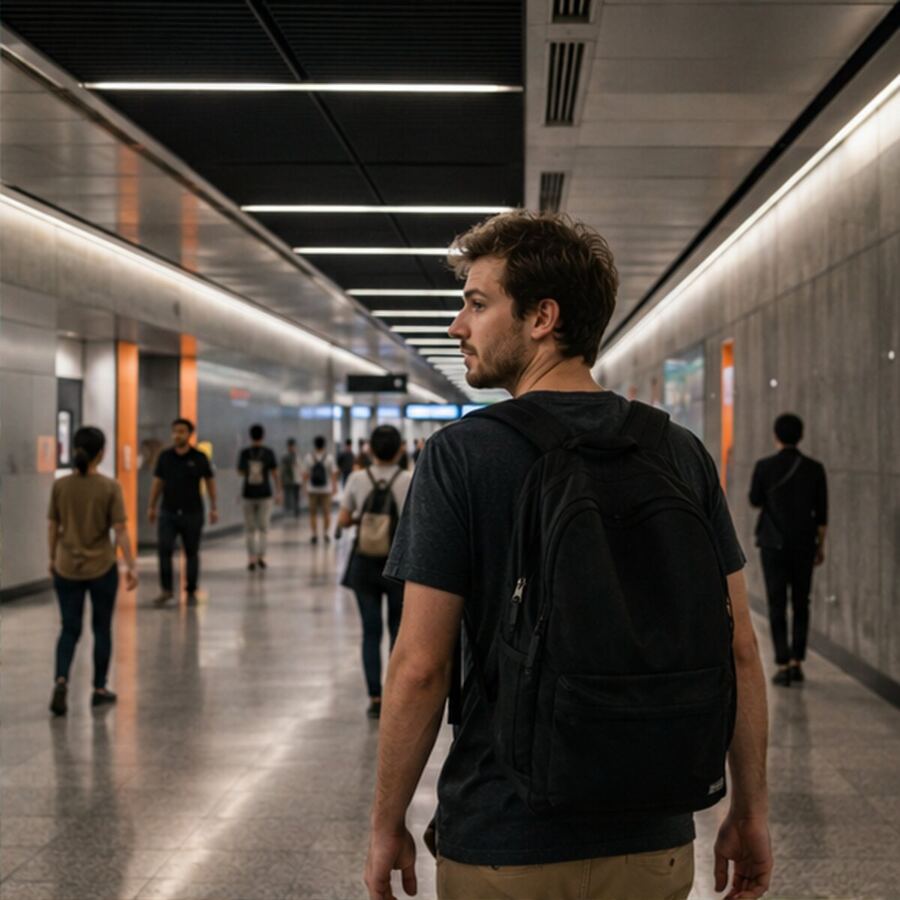
The MRT Blue Line forms a broad urban loop and reaches areas that feel different from the BTS spine. Sukhumvit connects to BTS Asoke; Si Lom connects to Sala Daeng; Sam Yan serves university, creative and central-city activity; Hua Lamphong reaches the old-town edge; Sanam Chai opens cultural Bangkok; Tha Phra and Bang Phai connect western districts; Bang Sue and Chatuchak Park serve the north; Lat Phrao, Ratchadaphisek, Huai Khwang and Thailand Cultural Centre support residential, office and entertainment zones; Phra Ram 9 is a major commercial node.
MRT can be especially useful for workers who prefer less tourist-oriented neighbourhoods or need access to government, education, cultural and newer office zones. Around Huai Khwang and Ratchada, late-opening food and dense residential life support flexible hours, though noise and traffic vary. Sam Yan and Si Lom combine central access with universities, offices and food. The western extension places more local cafés within reach, but many require a bus, motorbike or longer walk after the train. Use the exit number and actual last-mile route as part of every café decision.
The Purple, Yellow and Pink lines extend the practical map further. They can make Nonthaburi, Lat Phrao’s eastern side, Srinagarindra, Ram Inthra and Min Buri more accessible, especially for people living outside the central tourist corridor. These areas may offer larger cafés, parking and lower accommodation costs, but the network can involve interchange time and lower late-night convenience. They work best when your home and most regular destinations sit on the same corridor, not when every day requires returning to central Sukhumvit.
4. Match BTS and MRT areas to the work mode
For Deep Focus, look beyond the station frontage. Ari’s residential sois, quieter parts of Sathorn, upper floors around Sam Yan and selected cafés in Lat Phrao or western MRT districts can work, but time of day matters more than the line logo. For Calls & Meetings, Asoke–Sukhumvit, Sala Daeng–Si Lom, Chong Nonsi and Rama 9 provide business access and backup venues. Choose a café with a conversational zone or reserve a coworking room. Never assume that an expensive central café permits long video calls.
For Casual Laptop work, both systems offer abundant choices. BTS-connected malls are weather-proof and easy for one-hour sessions; MRT neighbourhood cafés can feel more local and may support slower routines. Stay & Work requires food, toilets, comfortable seating and power, so full-service cafés around Ari, Phrom Phong, Thong Lo, Sam Yan and larger outer neighbourhoods may outperform tiny specialty bars. Quick Stop strongly favours direct station connections, clear exits and fast service. The best rail line changes with the mode because access is only one part of workability.
For Work Together, search for larger tables and conversation-friendly rooms rather than a fashionable neighbourhood. Office corridors around Sathorn and Rama 9, mixed-use developments near interchanges and larger cafés in outer districts may be better than compact shops in Thong Lo or the old town. Confirm group size with the venue and consider booking. A team of four buying drinks still creates more operational impact than four solo customers spread across individual seats, so the social fit of the room matters as much as transport.
5. Compare fares, payment and last-mile costs
Do not publish a fixed monthly rail budget without checking current fares. BTS and MRT use route-dependent pricing, promotions and payment systems that can change. Use the official calculators for your real origin and destination, then multiply by expected trips. Include separate transfers where through-ticketing does not apply. In 2026, MRTA and operators have continued expanding contactless payment options, but a traveller should still confirm which card or ticket works on each line. Keep a small balance or backup payment method rather than assuming one bank card covers every segment.
Last-mile transport can exceed the rail fare. A motorbike taxi in each direction, a rain-day taxi or repeated short ride-hailing trips can change the economics of a cheaper outer apartment. Walking is financially free but not time-free, especially in heat, rain or streets with difficult crossings. Compare a 3,000-baht rent saving with thirty days of extra travel, not with one trip. For café work, calculate cost per productive hour: transport plus orders plus time lost to the route. A slightly higher rent beside a useful interchange can return value through more reliable workdays.
Weather resilience has economic value. A BTS skywalk or MRT exit inside a connected building can protect equipment, clothing and energy during storms. Conversely, an elevated station may still involve uncovered stairs, while an underground exit may emerge far from the destination. Save two routes for important days: the normal walk and a rain-safe alternative. Check Thai Meteorological Department forecasts when your plan depends on a long exposed connection. Reliability is part of affordability because a missed call or unusable afternoon can cost more than a fare difference.
6. Practical choices for different digital nomads
If you are new to Bangkok and want maximum flexibility, start near an interchange such as Asoke–Sukhumvit or Sala Daeng–Si Lom, then learn your actual weekly map before signing a longer lease. If you prioritise neighbourhood cafés and a slower rhythm, Ari or Saphan Khwai can be attractive on BTS. If you work with CBD clients, Sathorn–Silom reduces business friction. If value and residential life matter more, consider On Nut, Phra Khanong, Huai Khwang, Lat Phrao or selected outer-line areas—provided the route to your real commitments remains simple.
Build a two-line workweek. Choose one direct-line café for focused work, one interchange-area venue for meetings and one dependable fallback near home. Save the station exit and walking route for each. Schedule calls in the most predictable location rather than the most beautiful one. Use exploration days to test new neighbourhoods without attaching a high-stakes deadline. After two weeks, review where you actually travelled, how many transfers you made and which café sessions were productive. Your evidence will answer BTS versus MRT more accurately than any generic ranking.
The final rule is simple: choose the network that makes your most frequent good day easy. A good day includes a manageable trip, a suitable work seat, food, a backup connection and an uncomplicated return home. BTS may win for one person and MRT for another, even at the same budget. ThaiCafes station filters let you compare cafés in actual station order, while the work-mode filters help you judge the task after choosing the corridor. Use both layers—transport first, work fit second—to build a Bangkok routine that remains flexible.
Frequently asked questions
Frequently asked questions
Is BTS or MRT better for tourists working remotely?
BTS is often easier for the Sukhumvit–Siam–Sathorn corridor, while MRT opens a broader set of neighbourhoods. Stay near an interchange if your meetings and cafés are spread across both.
Which Bangkok interchange is best for digital nomads?
Asoke–Sukhumvit offers broad central access; Sala Daeng–Si Lom is strong for CBD meetings; Mo Chit–Chatuchak Park suits the north. The best choice depends on your weekly destinations.
Do BTS and MRT use the same ticket?
Do not assume one ticket or card works everywhere. Payment integration changes over time, so check the official operator information for every line you plan to use.